01
Supply both sides of a pair
One record proves only what that page declares. Add the target page’s head as another record to distinguish a missing return link from an unverified target.
International SEO
Add each page URL and its HTML or link tags, then run a local check. URL fields are references only; no page is fetched.
Add a page or load the example.
Only pasted content is checked in this tab. Page URLs are never fetched.
Add a page or load the example.
Before a multilingual release, a single page can look correct while its sibling omits a return link. This hreflang checker compares the snapshots you paste, so the missing edge is visible beside its source and target.
A one page hreflang validator cannot prove return tags on other pages. Here you can add their markup, inspect a canonical conflict and copy a proposed tag set only when language to URL mappings are clear.
A local view of the evidence in your pasted pages.
The matrix separates a reciprocal pair from a missing return tag. If a target page has not been supplied, its cell says unverified instead of treating an unseen page as broken or healthy.
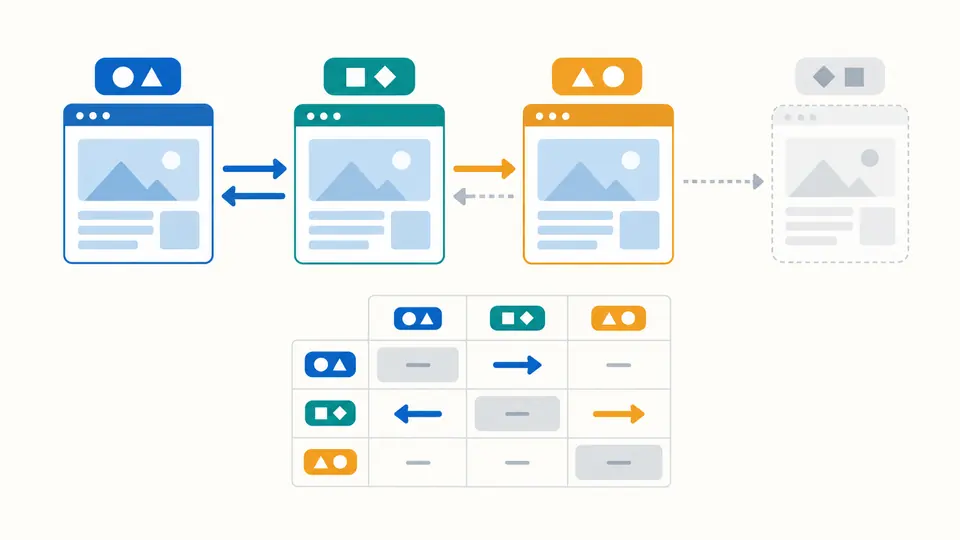
Page URLs are only labels for the pasted HTML. The checker never requests them. Review self references, duplicate language codes and canonical warnings before you test the deployed site separately.
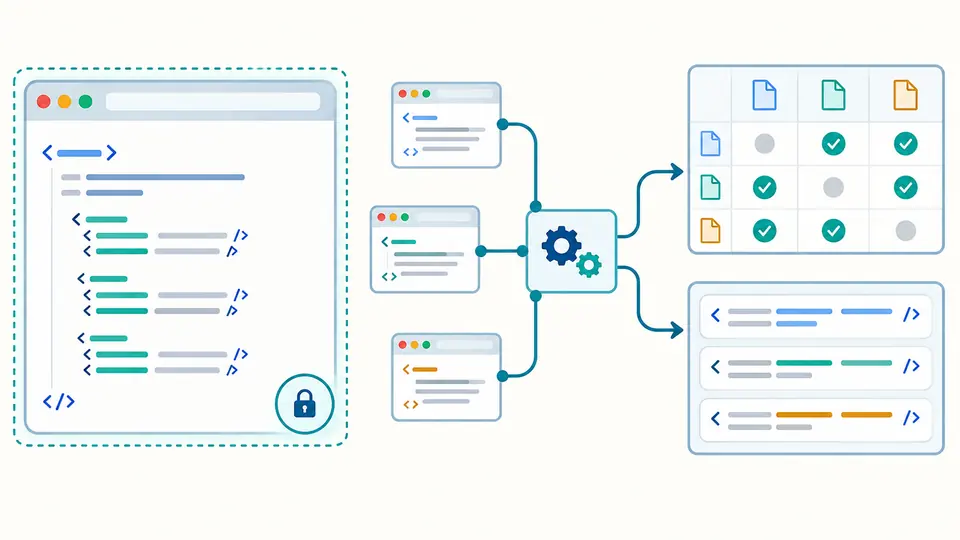
One record proves only what that page declares. Add the target page’s head as another record to distinguish a missing return link from an unverified target.
The expected language list starts empty and x-default is optional. Turn on the x-default requirement only when your release plan actually includes a fallback page.
This check runs only when you press Check or Ctrl/Cmd+Enter. Any edit makes the earlier result stale and disables export until you run it again.
A cell links a source declaration to the supplied target page, then checks whether the target points back. It does not infer missing HTML from a URL alone.
Invalid or repeated hreflang values, omitted self links and optional expected languages become page specific issues with line numbers.
A cross language canonical to another supplied page is flagged; other nonself canonicals get review warnings. Suggested HTML tags require an unambiguous language mapping.
Yes for a relationship you want checked: page A and page B should declare each other. This tool confirms that only when you provide markup for both; otherwise it marks the target unverified.
Usually each localized page uses its own canonical. A different URL can be intentional for same language regional variants, so this tool calls for review; a cross language target in the supplied set is a stronger conflict.
No. x-default is a recommended fallback for unmatched users, not mandatory on every site. The requirement switch is off by default.
Use a language code such as en, optionally with region as en-GB or script as zh-Hant. Reserved regions such as UK are not accepted here; x-default is a special fallback value.
No. The checker only parses the pages pasted into this tab. It does not crawl URLs, sitemaps, response headers or JavaScript rendered changes.
Still have a question?
Paste each version’s head, run the local matrix, and carry the issue list into your release review.
Keep the hreflang checker beside your template edits so every newly added locale gets checked against the existing versions.
Your pasted HTML remains in this browser tab.