01
Choose the notation you have
Bare digits are decimal: 41 means U+0029. Prefix 0x or U+ for hexadecimal; A uses HTML numeric syntax. A typed glyph selects its single code point.
Developer reference
Browse ASCII, Unicode blocks or named HTML entities. Search a character, decimal code, U+ value or entity, then inspect its bytes.
Loading local reference data…
Select a row to inspect its values.
Queries stay on this page; source links open only when clicked.
Loading local reference data…
When a log shows LF, a source file shows U+0041, or markup contains &, an ASCII table alone leaves several lookups to join by hand. Start with the form you already have and open its code point details.
This ASCII table stays within the 7-bit 0–127 range. The neighboring Unicode and HTML views supply names, blocks and entities without pretending that every value from 128 to 255 is one universal extended ASCII set.
One selected entry connects the number, character and encoding.
This ASCII table labels control codes such as LF and DEL instead of rendering them as mystery glyphs. Decimal 65, 0x41 and U+0041 converge on A, while 128 remains outside ASCII.
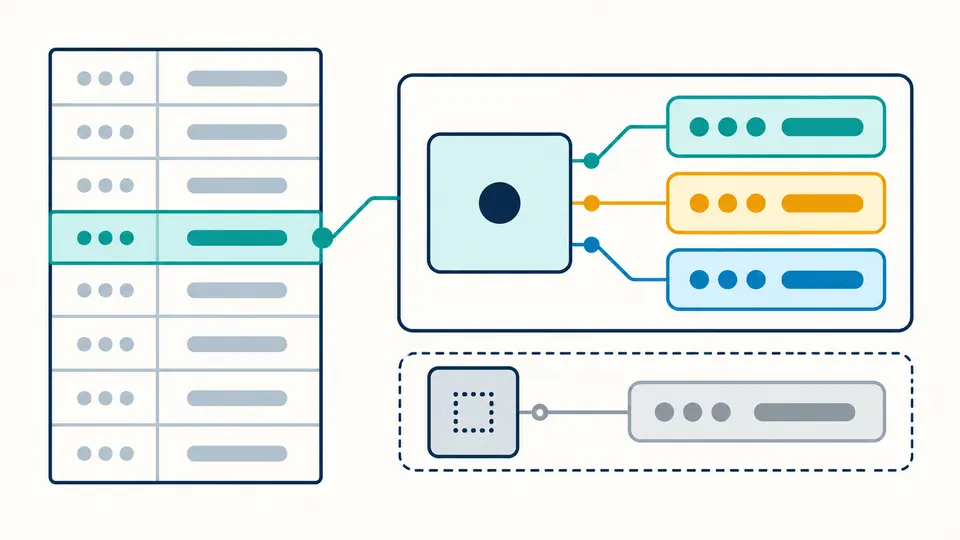
A named HTML reference can map to two Unicode code points. The detail panel preserves both, and its UTF-8 bytes describe the entire resulting string rather than a fictional single character.
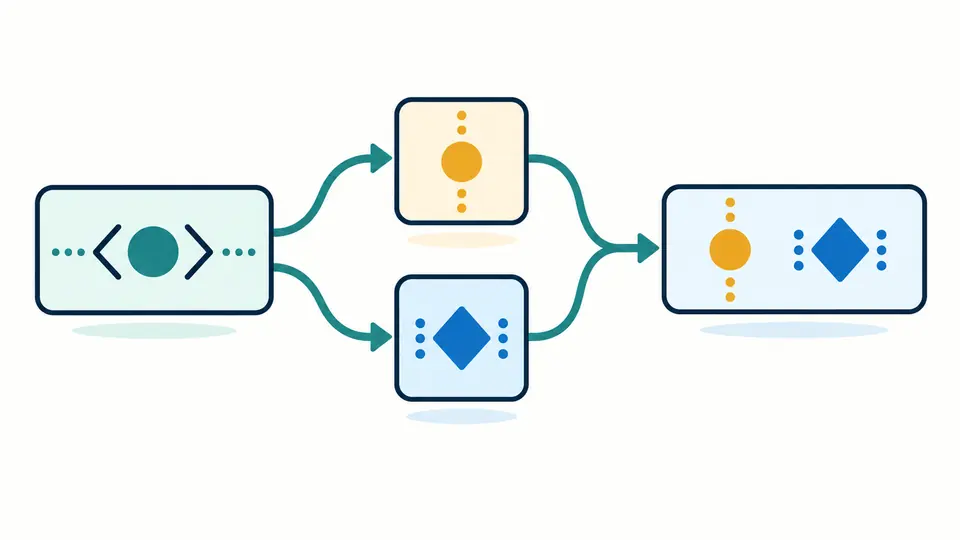
Bare digits are decimal: 41 means U+0029. Prefix 0x or U+ for hexadecimal; A uses HTML numeric syntax. A typed glyph selects its single code point.
The ASCII view begins with all 128 entries. Unicode lists the official 17.0.0 blocks and searches English names; HTML lists canonical semicolon-terminated entity names. Each view loads 50 rows at a time.
Select a row to see the Unicode name, block, UTF-8 bytes and numeric HTML forms. Copy only the selected value; the Inspector link opens separately and never transfers the query.
The ASCII table covers 0–127, including NUL, LF, CR, space and DEL. A Unicode character lookup handles values beyond that range without relabeling them ASCII.
Unicode blocks follow Blocks.txt 17.0.0. Search an English name or open a block; unassigned positions stay visible as unassigned rather than receiving invented names.
The HTML entity reference includes 2,125 canonical names from the WHATWG snapshot, including names whose output has two code points.
The detail card gives code point notation, decimal and hexadecimal values plus UTF-8 bytes. Copy the character, its U+ code or a matching entity separately.
A code point is a numbered position such as U+0041. This reference shows that number, the official English name when assigned, its Unicode block and its encoded bytes.
Unicode assigns code points and properties; UTF-8 encodes scalar values as bytes. For the 0–127 ASCII values the UTF-8 byte is the same number, while a symbol such as © uses more bytes.
Open the HTML view and search the symbol or its U+ value. A character may have several named entities; the list uses the canonical spelling with a trailing semicolon.
That is often an encoding or decoding mismatch, which a character table alone cannot diagnose. Copy the actual character into Unicode Inspector to inspect code points and bytes before attempting repair.
No single extended ASCII is part of the 7-bit ASCII standard. Different 8-bit encodings assign different characters above 127; this ASCII table stops at 127 on purpose.
Missing an entry or found an error?
Use this ASCII table to resolve one code or character, then switch to Unicode names or HTML entities without losing the reference context.
Unicode names and blocks: version 17.0.0.