publicAllows shared storage when the other caching requirements are met.
Line 1, column 16
HTTP & Request Debugging
Parse a response header or build one with directive fields. Compare freshness using an assumed current age.
Headers and form values stay in this browser. No origin requests are sent.
Fresh in this age example
max-age: 3600 seconds lifetime
Freshness budget remaining: 3600 seconds
Fresh in this age example
s-maxage: 86400 seconds lifetime
Freshness budget remaining: 86400 seconds
Once stale, revalidate before reuse under these directives.
Assumes an already stored response and the age supplied below. Freshness does not guarantee storage or reuse; other headers and platform rules still apply.
Use an assumed current_age from 0 to 2147483648. An Age header alone does not include all transit and residence time; this is a static example.
publicAllows shared storage when the other caching requirements are met.
Line 1, column 16
max-age=3600Freshness lifetime for private caches and shared caches without s-maxage.
Line 1, column 24
s-maxage=86400Overrides max-age for shared caches; not for browsers.
Line 1, column 38
Showing 3 of 3 directives
No issues detected in the modeled directives. This does not verify deployment.
3 directives · 0 policy notes
A CDN can keep a response longer than a browser without changing the resource itself. The Cache-Control generator helps you inspect that split when a page seems fresh at one layer and stale at another. Begin with the supplied example, then substitute your own header.
This Cache-Control header builder also parses existing HTTP caching headers. It keeps uncommon extensions visible, so reviewing an unfamiliar policy does not start by reducing it to the few switches a form understands.
The Cache-Control generator preserves the parser input when you switch to the form. A quoted field list or repeated directive remains available for inspection. Building a new policy does not overwrite that evidence, and normalization never silently removes conflicts.

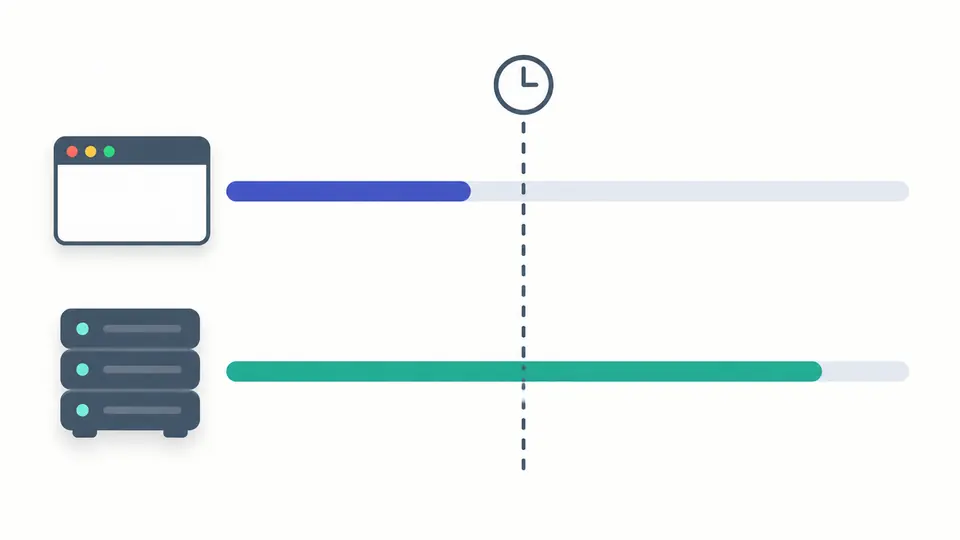
With max-age=3600 and s-maxage=86400, the two caches use different lifetimes. Set the assumed current age to 4000 seconds: the browser example is stale, while the shared example has 82400 seconds left. Those figures describe freshness, not a promised cache hit.
Paste a bare value or one or more Cache-Control field lines. A full response block containing Age or ETag is rejected rather than partially ignored. Quoted commas remain inside their argument.
In the form, an empty time field omits the directive; 0 emits an explicit zero. Switching modes retains both inputs. Loading the example or clearing first previews replacement and allows one undo.
The age field is an assumed current response age in seconds, not a clock or a fetched Age header. Automatic runs wait 350 ms; turn them off for the button or Ctrl/Cmd + Enter. Any edit disables old exports immediately.
Names are case-insensitive and the output uses lowercase names. Arguments, quoted spelling, order and repeated entries stay visible. Empty comma members are skipped. Each row includes a source position, making multi-line headers easier to review.
Combine nine switches with max-age, s-maxage, stale-while-revalidate and stale-if-error. Time inputs accept whole seconds from 0 to 2147483648. Incompatible choices remain visible with diagnostics; the form does not decide your policy by deleting them.
The max-age vs s-maxage comparison separates browser and shared cache lifetimes. no-cache requires validation before reuse; no-store prohibits storage under its ordinary semantics. A positive lifetime alone does not establish that a response can be stored or served.
Unknown extensions, field-qualified restrictions and must-understand receive conditional explanations. Repeated known directives or invalid arguments suppress numeric conclusions. Copy and text download contain the complete current header, even when the list displays only 50 rows.
The no-cache vs no-store distinction is about reuse versus storage. Ordinary no-cache allows storage but requires successful validation before another reuse. Ordinary no-store prohibits storing the response. Neither is a command to erase every previously cached copy.
Choose a lifetime based on how long the resource may remain unchanged for clients. Versioned assets and frequently changing pages have different needs. The default hour/day pair is a comparison example, not a recommendation for your endpoint; test the deployed response afterward.
immutable indicates that the representation will not change while it is fresh. It does not create a lifetime, prevent every forced reload or remove validation after staleness. Its arguments are ignored and repeated instances are equivalent to one under RFC 8246.
max-age applies to private caches and to shared caches without an overriding s-maxage. s-maxage supplies the shared-cache lifetime and requires revalidation once stale. It does not lengthen the browser lifetime.
No. This page constructs and inspects text only. To verify deployment, inspect the real response and the platform's cache configuration. A vendor override or another response header can change behavior even when the generated Cache-Control string is syntactically valid.
Something looks wrong?
Cache-Control generator: inspect your header, adjust the age assumption and compare both cache lifetimes before copying.