01
Check the direction
A − B keeps addresses in A that B does not cover. B − A reverses that decision without replacing your input. Overlap shows the common address space, including partial intersections rather than just matching text.
IP & Networks
One CIDR or IP per line. Choose a set operation; splitting uses only list A.
Calculated in this browser. No network queries or input storage.
Exact union of both lists; gaps stay excluded.
Combined input: 1000 nonempty lines / 100000 UTF-16 units. Output: up to 4096 CIDRs. Counts include all addresses.
Inputs or options changed. Calculate again before exporting.
A CIDR merger is useful when a long allowlist hides duplicate or overlapping entries. Compare the addresses covered by two lists instead of comparing their text. A different prefix can describe the same coverage, while one missing subnet can change the result substantially.
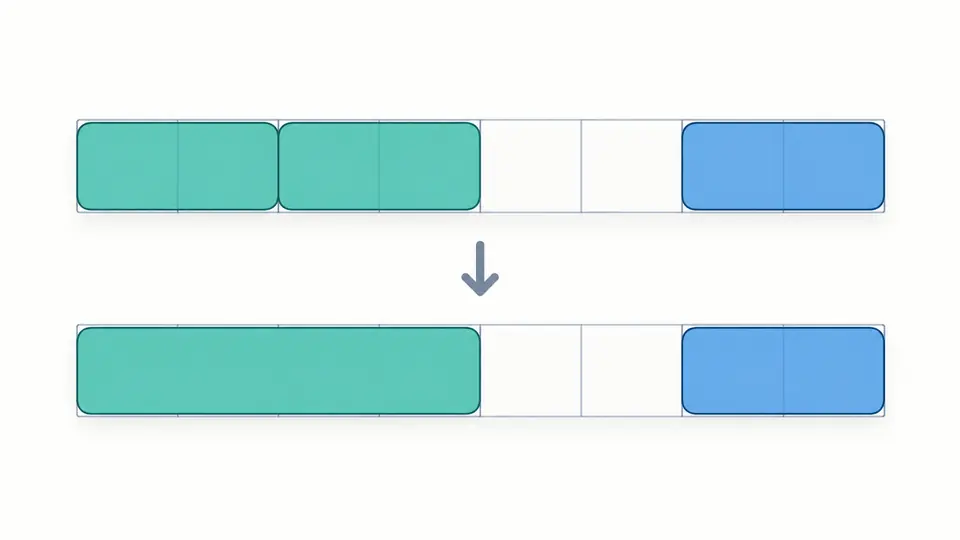
The CIDR merger combines aligned adjacent blocks and removes redundant coverage. Two /25 siblings become a /24; two separated /26 blocks remain separate. The gap is preserved, so a shorter output never quietly admits addresses you did not supply.
An exclusion can cut through the middle of a network. Subtracting 192.0.2.64/26 from 192.0.2.0/24 leaves 192.0.2.0/26 and 192.0.2.128/25. The result expresses both remaining portions with aligned prefixes, even though neither line appeared in the input.
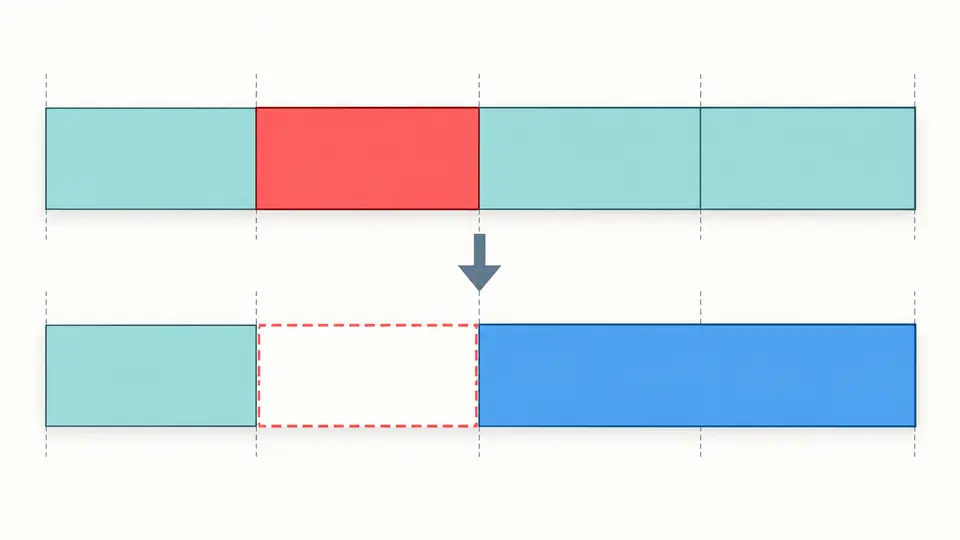
A − B keeps addresses in A that B does not cover. B − A reverses that decision without replacing your input. Overlap shows the common address space, including partial intersections rather than just matching text.
The CIDR splitter uses only A and retains B for later operations. /26 divides a /24 into four pieces. Every original A prefix must be no longer than its family’s target prefix; even a contained /32 can therefore block a /26 split.
Automatic calculation waits 350 ms after editing. Turn it off to use Calculate or Ctrl/Cmd + Enter. Any edit disables export until recalculation. Examples and Clear preview replacement counts; Undo restores the previous inputs and result.
Duplicate and contained ranges count once. Networks are sorted numerically, IPv4 first. Host bits are normalized to the network boundary and counted in the report, without rewriting either source list.
Intersection and overlap return the shared ranges of A and B. A list may be empty: its intersection is empty, while subtracting it changes nothing. An empty successful result is distinct from an input error.
Both difference directions can remove several overlapping exclusions at once. Exclusions outside the source do nothing. A containing exclusion removes the whole source; smaller exclusions create only the necessary remaining CIDRs.
IPv6 uses exact 128-bit arithmetic. ::/0 contains 340282366920938463463374607431768211456 addresses. Results show each family separately; Copy and TXT download include all computed prefixes, even when only the first 100 are displayed.
Aligned sibling networks of the same prefix length can become their parent. For example, 192.0.2.0/25 and 192.0.2.128/25 form 192.0.2.0/24. Adjacency alone is insufficient when the parent boundary does not align.
Yes. Set union counts an address once, whether it appears in duplicate networks or in a smaller network already contained by a larger one. This changes the representation, not the addresses covered.
Yes, as a list of exact CIDRs. The result keeps separate blocks where there is a gap. It will not broaden the list to a single supernet that also covers unspecified addresses.
Put the larger networks in A, exclusions in B, and choose A − B. Exclusions are combined before subtraction. The remainder may contain several prefixes rather than the original network line.
Choose a target at least as long as every original prefix of that family: up to /32 for IPv4 or /128 for IPv6. Equal length preserves a block. A split requiring more than 4096 results is rejected.
No. Address coverage alone cannot represent next hops, route preference or ordered firewall decisions. Review those settings in the target system before replacing its configuration.
Have another domain case to check?
Use the CIDR merger with your two lists, verify the operation direction, then copy the complete result.