01
Supply related objects together
Separate Ingress, Service and optional Deployment or Pod documents with ---. Namespaces matter: the same Service name in a different namespace cannot satisfy an Ingress reference.
Kubernetes / Helm
Paste rendered YAML, enter one host and path, then inspect the static route chain.
Paste rendered manifests or load an example.
Analyzed in this browser; no cluster connection or HTTP request.
Exact and Prefix follow Kubernetes path rules; controller-specific paths are not simulated.
Limits: 300,000 characters, 100 resources, 500 paths.
Paste rendered manifests or load an example.
A path that looks right in an Ingress can still point at the wrong Service port. Use this Kubernetes Ingress path tester when a request selects a rule but the backend reference is unclear.
The report shows which standard rule wins and how the Service port maps to targetPort. It never sends an HTTP request, so use cluster diagnostics to confirm a live endpoint.
The Kubernetes Ingress path tester chooses the longest matching standard path, breaks an equal-length tie in favor of Exact, and follows its Service port. This makes a specific /api request easier to explain than a generic manifest diagram.
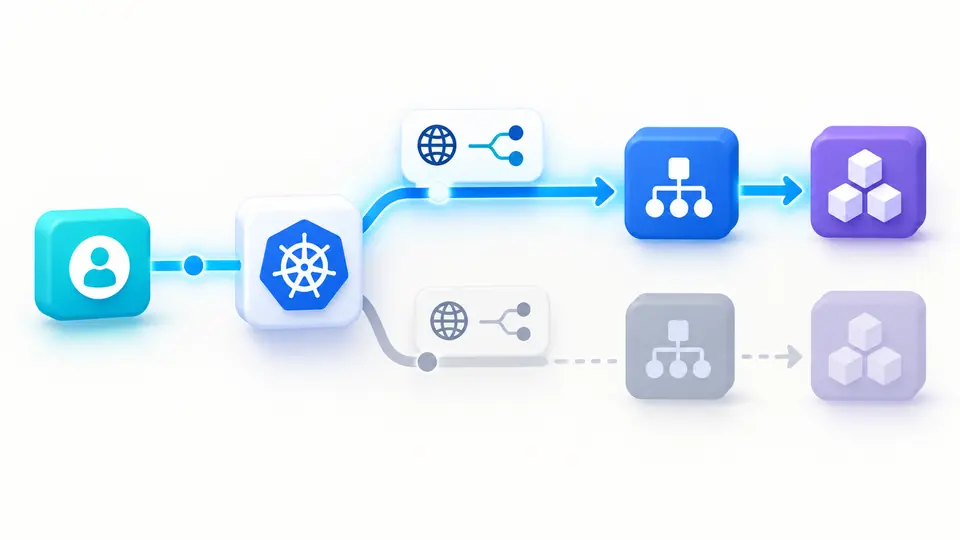
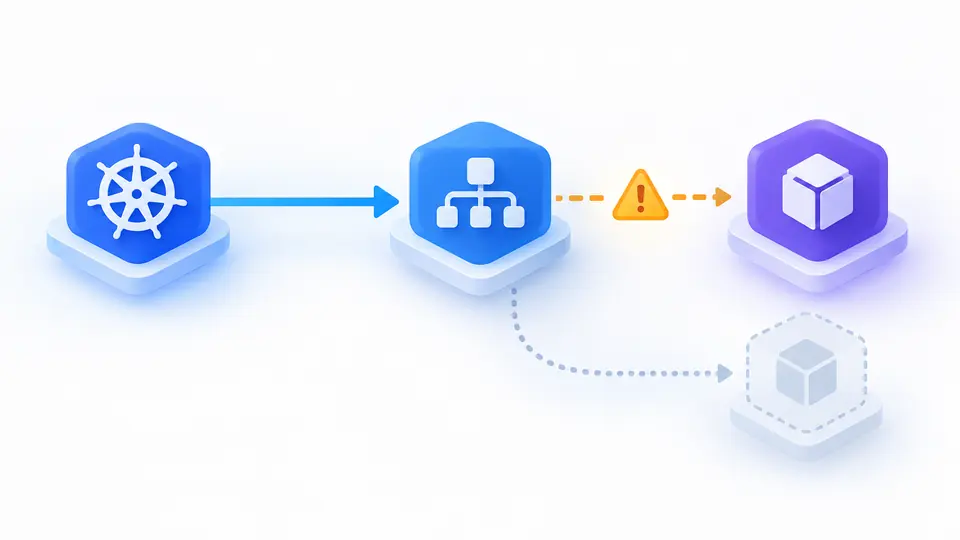
If a backend names an absent Service port, the chain stops at that link. If no workload manifest was supplied, the report says evidence is missing instead of claiming an endpoint is unhealthy.
Separate Ingress, Service and optional Deployment or Pod documents with ---. Namespaces matter: the same Service name in a different namespace cannot satisfy an Ingress reference.
Leave the path at / or enter a concrete path such as /api/orders. Enter the HTTP Host header when your rule specifies a host; blank Host can only exercise hostless rules.
Matched means the static rules and references resolve. Broken points to a missing local reference; uncertain marks controller-specific behavior. Copy the JSON report only while it is fresh.
The Ingress path matching check handles exact hosts, one-label wildcard hosts, Exact and segment-aware Prefix paths. /api does not accidentally match /apix.
The Service port vs targetPort step uses the Ingress backend’s port number or name to find a Service port, then reads its targetPort or the default equal port.
When matching Deployment templates or Pods are pasted, the selector is compared with their labels. Without those objects, the result stays unknown rather than pretending a live Pod exists.
A 404 can come from a Host or path mismatch, a default backend, the application itself, or controller behavior. This report shows the static rule and reference chain; inspect your controller and application to identify the actual response.
The Ingress backend selects the Service port or its name. The Service then maps that port to targetPort. Pointing the Ingress directly at 8080 when the Service exposes port 80 leaves a broken reference here.
No. Prefix matches URL path segments: /foo matches /foo and /foo/bar, but not /foobar. The comparison is case-sensitive.
The longest matching path wins. For the same path length, Exact wins over Prefix. If equally ranked routes span Ingress objects, the tool marks a controller-related conflict.
No. Even a complete static chain says nothing about controller deployment, DNS, readiness, EndpointSlices or actual network access. Test the live cluster separately.
Still have a route question?
Try a sample Host and Path, then inspect each named port in the result.
Static analysis stays in this browser.